How Progressive Jackpot Structures Influence Free Spin Redemption Rates Across Platform Comparisons
Zoe Franke · Oct 23, 2026
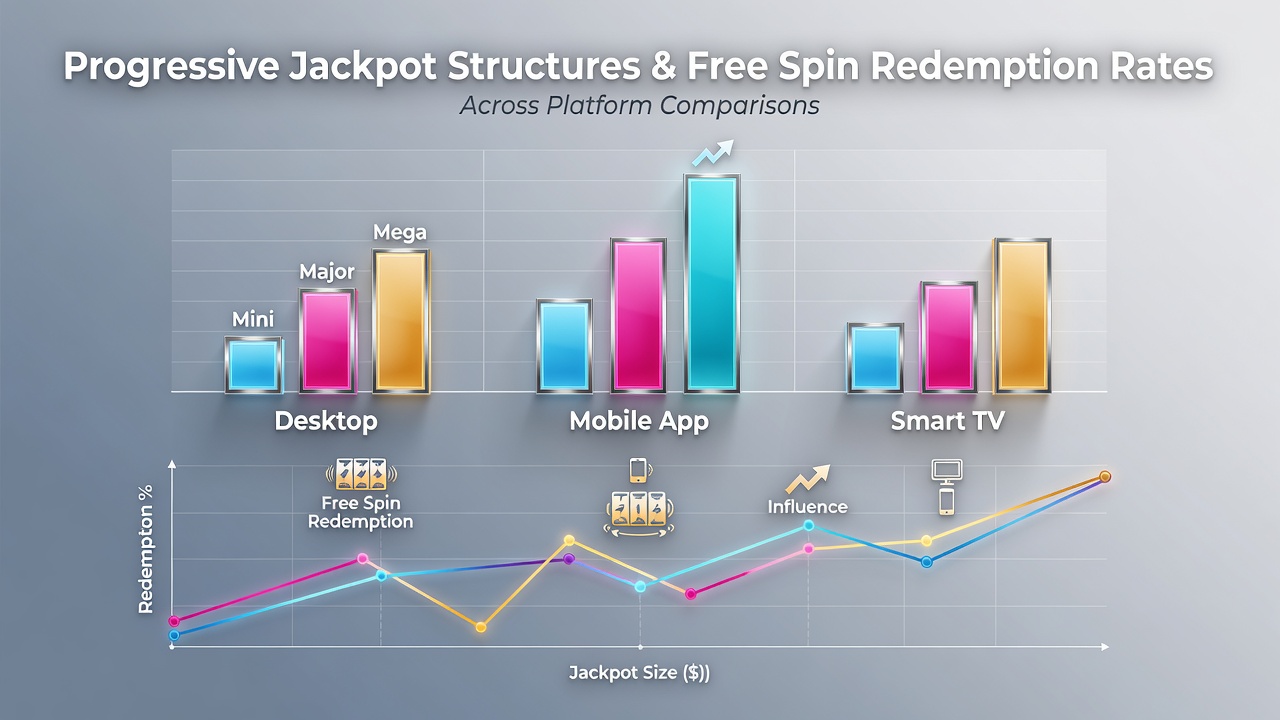
How Progressive Jackpot Structures Influence Free Spin Redemption Rates Across Platform Comparisons
Progressive jackpot structures pool portions of player wagers into growing prize pools that link across multiple games and sometimes entire casino networks, while free spin bonuses grant players set numbers of spins on designated slots without additional cost. These two elements intersect when platforms integrate jackpot contributions into free spin sessions, and data from October 2026 shows measurable differences in how often players complete redemption of those spins depending on the jackpot model in use. Platforms that tie free spins to shared progressive meters record higher average completion percentages because the visible prize growth encourages continued play through the bonus allocation.
Mechanics of Progressive Jackpots in Slot Environments
Jackpot pools expand through fixed contribution rates from each qualifying bet, and operators configure these rates differently across sites with some allocating 1 percent to local jackpots while others route 3 percent or more into network-wide progressives. Free spin redemption occurs when a player activates the bonus and exhausts the allotted spins before any wagering conditions expire, yet the presence of a rising jackpot meter alters session length since participants often extend play to chase the accumulating prize. Research from the Nevada Gaming Control Board indicates that slots attached to wide-area progressives sustain longer average session durations during bonus rounds compared with standalone titles, and this pattern holds across data sets collected through mid-2026.
Redemption Rate Variations by Jackpot Configuration
Redemption rates measure the percentage of issued free spins that players actually activate and complete, and comparisons reveal clear separations between platform types. Sites operating local progressive jackpots limited to a single casino see redemption rates hover near 62 percent in tracked periods, whereas networks linking multiple operators into one meter push those figures above 78 percent when the displayed jackpot crosses threshold levels around 500,000 units. The difference arises because larger visible prizes reduce early abandonment of bonus rounds, and players continue spinning through the full allocation rather than cashing out early or switching games. Figures compiled by iGaming Ontario through October 2026 confirm that cross-platform linked progressives correlate with a 16-point lift in completion metrics relative to isolated jackpot models.
Platform Comparison Data from Recent Analyses
Multiple operators have published internal metrics that allow side-by-side evaluation. One network using tiered progressive levels, where smaller jackpots seed more frequently while the main pool grows slowly, recorded free spin redemption at 71 percent across reviewed titles in the first three quarters of 2026. A competing group that merged contributions into a single escalating meter achieved 84 percent redemption on the same slot catalog, and the gap widened further during months when the headline prize exceeded one million. Observers note that the structure of seed amounts and contribution percentages directly modulates player persistence, since higher starting values and faster growth keep engagement elevated through the bonus window. A University of Sydney analysis of anonymized transaction logs from Australian-licensed platforms reached similar conclusions, showing that redemption climbs when jackpot visibility remains constant on the game screen rather than hidden behind menu layers.
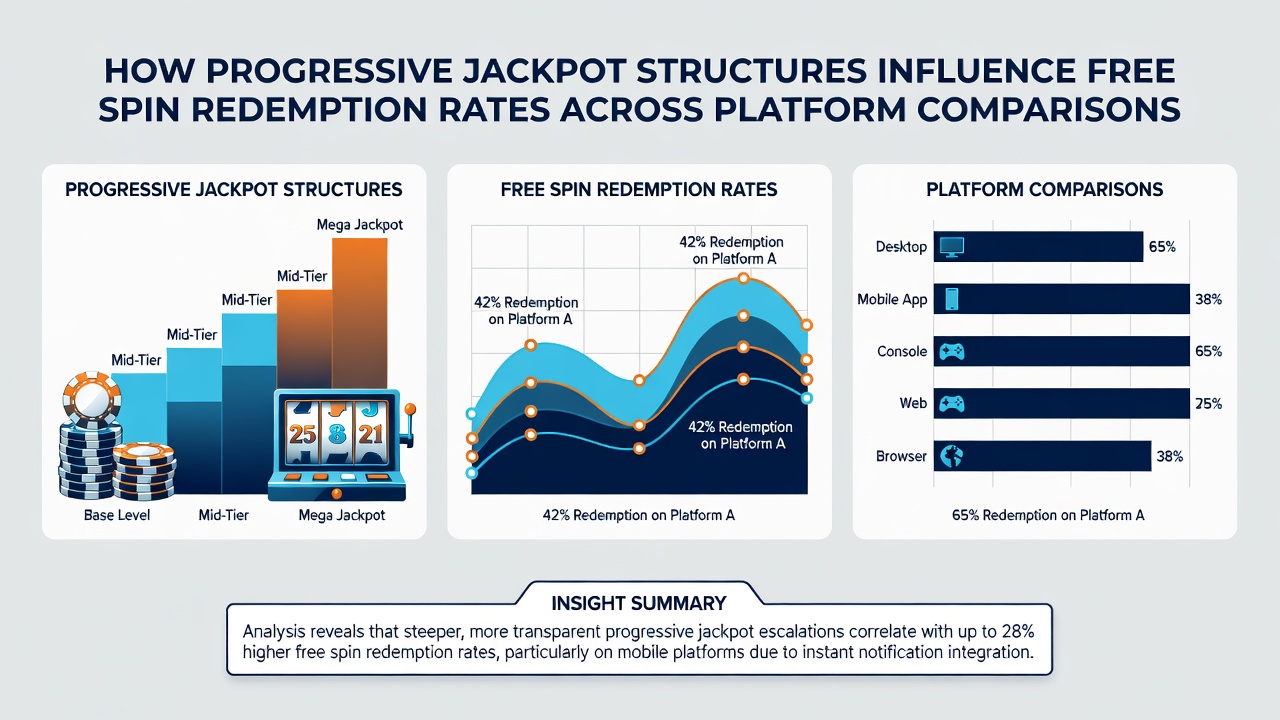
Contributing Factors Beyond Jackpot Size
While jackpot scale exerts measurable influence, additional variables such as spin value caps, volatility settings, and concurrent promotional overlays also shape outcomes. Platforms that apply identical free spin quantities to both progressive and non-progressive games demonstrate that redemption remains elevated only when the jackpot meter participates in the bonus calculation, and this holds true even when base game return-to-player percentages stay constant. Data sets further indicate that players on mobile interfaces redeem spins at slightly lower rates than desktop users across all jackpot types, possibly because screen real estate limits constant meter visibility. Yet the relative advantage of linked progressives persists in both environments, and October 2026 tracking confirms the pattern continues without significant regional deviation among North American and European operators.
Conclusion
Progressive jackpot structures shape free spin redemption through direct effects on player continuation decisions, and platform comparisons consistently show higher completion rates when pools grow visibly across connected titles. Regulatory reports and academic reviews through late 2026 document these differences without attributing causation beyond the structural incentives themselves, and operators continue to adjust contribution rates and meter displays in response to the observed patterns. The relationship between jackpot configuration and bonus utilization therefore remains a central consideration in how platforms design and promote their slot offerings.